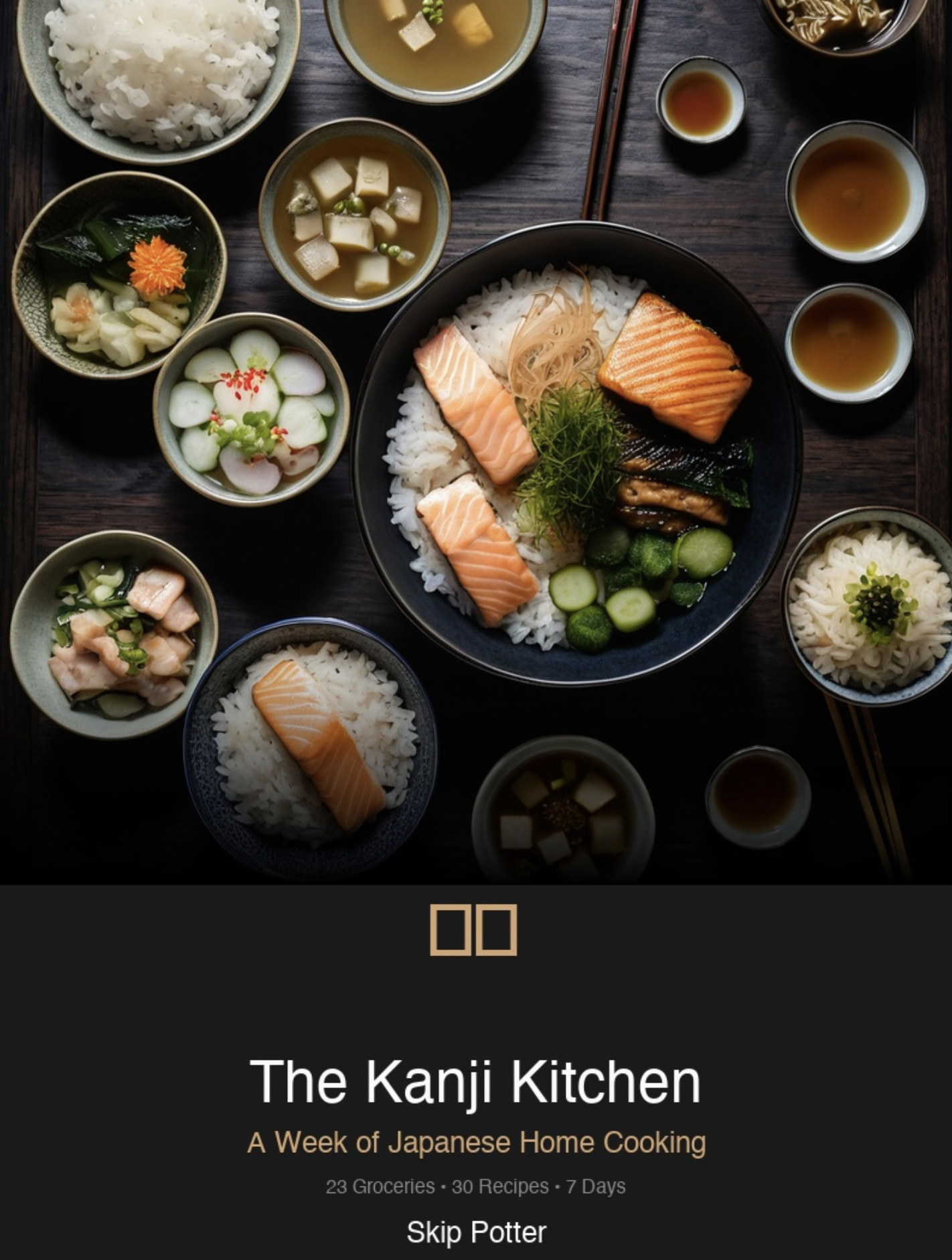
Description
You know the feeling at the checkout: the total comes to $155, and you already know half of it will be gone in a couple of days. Meanwhile, Japanese home cooks buy just 23 specific groceries to cover an entire week and feed the whole family for about $65 to $85. Every dinner is cooked from scratch with fresh vegetables, a serving of protein, and a bowl of rice on the side.
This is not elaborate Japanese restaurant cooking. It is about keeping a small, reusable set of Japanese staples and recombining them into simple meals all week long. Twenty-three groceries. Thirty recipes. Seven days. The core idea is that you are not buying ingredients for thirty separate recipes. You are buying twenty-three things that can make thirty recipes. The vegetables are not locked to one dish. The same cabbage appears in stir-fries, salads, and miso soup. The same soy sauce and mirin become the basis for teriyaki, ginger chicken, and pork rice bowls. Each ingredient earns its place by showing up in multiple meals. The weekly cost at Walmart is approximately $65 to $85 per person.
The six items to buy first — rice, soy sauce, mirin, miso paste, rice vinegar, and hondashi — are pantry staples that last for many weeks. Once those are in the house, next week’s grocery run gets substantially smaller. Salt, pepper, cooking oil, and sugar are treated as basic pantry supplies rather than weekly groceries. You likely already have them. What follows is a practical system: a grocery list, a shopping list organized by store section, and thirty recipes that recombine the same twenty-three ingredients into a full week of meals. The recipes are simple, the techniques are beginner-friendly, and the cost is a fraction of what most Americans spend on food each week.
Weekly Cost Summary
- Groceries (weekly, per person): $65 – $85
- Pantry starters (one-time): ~$25
- Week 2 onward (top-ups only): $40 – $55 (1/2)




Reviews
There are no reviews yet.